
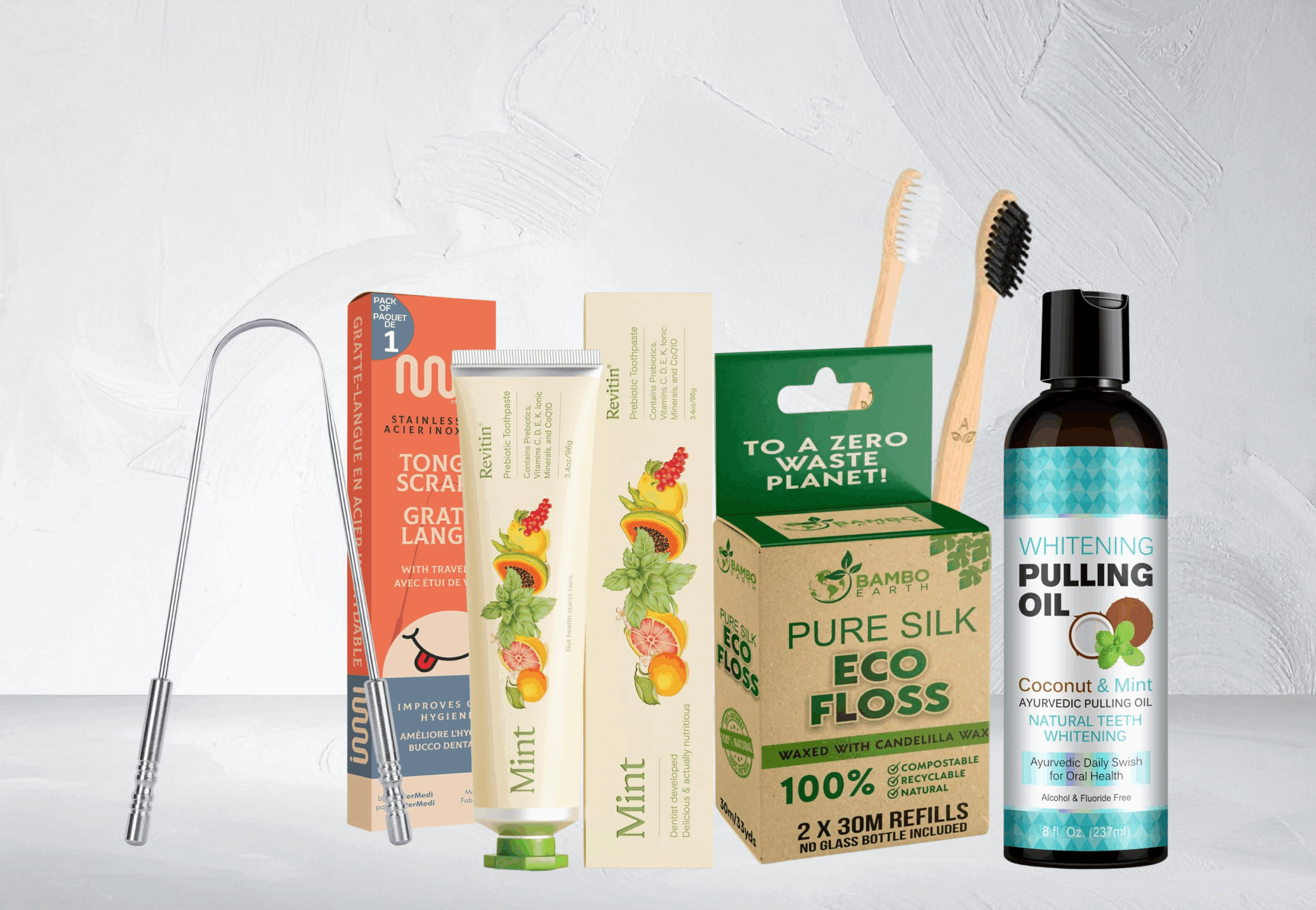
For years I have struggled with oral health, cavities, etc. until I made one huge change. I started actually looking at the ingredients in my toothpaste, mouth wash and oral products, did some research and wow, we are literally destroying our bodies every day. If you’re moving toward cleaner, gentler personal care, swapping to organic oral care is one of the easiest places to start.
A growing amount of research shows that strong antiseptic mouthwashes and other agents don’t just “clean” your teeth they kill bacteria completely. This can cause shifts in the oral microbiome (dysbiosis). Studies have found that chlorhexidine and some antiseptic rinses alter saliva bacterial communities, reduce saliva nitrite (which plays a role in blood-pressure regulation), and can create an environment more favorable to acidogenic bacteria when used long-term. Acidogenic bacteria basically creates an acidic environment contributing to cavities and tooth decay.
Below are five products I use and highly recommend as easy switches to staying healthy.
1) Revitin

Why this is the only toothpaste I’m using: I’d like to just say I’m not sponsored by Revitin, but I am obsessed with their product. Revitin is a prebiotic, fluoride-free toothpaste formulated without common irritants. It aims to support a balanced oral environment rather than simply killing bacteria.
Why this matters: Traditional toothpastes with harsh detergents and high antibacterial additives can irritate soft tissues and disrupt the balance of oral microbes. Choosing a milder, prebiotic formulation is one approach to encourage a healthy oral ecosystem while still removing debris. (Note: fluoride has clear benefits for cavity prevention; if you or your dentist rely on fluoride for decay prevention, discuss alternatives with them before switching completely.)
2) Coconut oil for oil-pulling

What it is: Oil pulling is a traditional practice (swishing oil in the mouth for 5–20 minutes) that proponents use to reduce plaque and freshen breath.
Coconut oil is non-antibiotic and doesn’t rely on harsh antiseptics; it appears to reduce bacterial load mechanically and via lauric acid’s mild antimicrobial properties without broadly wiping out the oral microbiome.
Clinical studies and reviews show that oil pulling with coconut oil can reduce plaque and gingival inflammation when used as an adjunct to normal oral hygiene.
How to use: Put about 1 tablespoon of coconut oil in your mouth, swish for 8–15 minutes, spit into the trash (not the sink), then rinse and brush. Use 2–3 times per week or daily if you like.
3) Organic Dental Floss

Why floss matters: Removal of interproximal plaque (what floss does) is essential. Choosing a floss that’s plant-based or coconut-infused is mostly about reducing exposure to questionable coatings.
4) Tongue Scraper (stainless steel)

A coated tongue is a major source of bad breath (volatile sulfur compounds).
Why scrape instead of only brushing: Scrapers remove the thick biofilm on the posterior tongue surface directly and efficiently, which often translates to noticeably fresher breath. When used gently, scraping is safe and complements brushing and flossing.
How to use: Gently scrape from the back of the tongue toward the front 2–4 times, rinse the scraper, and repeat daily (morning is common).
5) Organic / Bamboo Toothbrushes

Are they effective? Recent comparisons show bamboo or other biodegradable brushes perform comparably to plastic brushes for plaque removal when new and used correctly. Choosing bamboo lowers plastic waste and, if you’re environmentally conscious, fits a low-tox lifestyle without sacrificing brushing performance.
Care tip: Let bamboo brushes dry upright and replace every 3 months or sooner if bristles splay.
This post contains affiliate links. As an Amazon Associate, I earn from qualifying purchases at no additional cost to you. I only recommend products I genuinely love and believe will add value to your lifestyle.