
You’ve probably seen the word phthalates floating around on wellness blogs, labels, or maybe even in the news. It’s one of those “toxic chemical” words that looks impossible to pronounce and leaves most people thinking: okay, but what even is that?
First, how do you pronounce it?
You’re not alone if you weren’t sure on this one, because I definitely had to look it up after my brother made fun of the way I was saying it! Phthalates is pronounced “THAL-ates.” The “ph” is silent, which makes it a little less intimidating.
What are phthalates?
Phthalates are a group of synthetic chemicals used to make plastics more flexible and durable. They’re also used in personal care and cleaning products to make fragrances last longer. If something is bendy plastic or has a long-lasting artificial scent, there’s a good chance phthalates are involved.
How Phthalates Are Made
Phthalates don’t occur naturally and are created through industrial processes that combine two main ingredients:
- Phthalic anhydride (a compound made from petroleum/oil).
- Alcohols (usually simple alcohols like ethanol, methanol, or longer-chain alcohols).
The process is basically a chemical reaction called esterification, where phthalic anhydride reacts with an alcohol in the presence of a catalyst. This produces phthalate esters, the actual chemicals used in plastics and products.
Where are phthalates found?
Unfortunately, in today’s world they’re pretty widespread, and mostly everyone comes into contact with them on a daily bases in:
- Personal care products: perfumes, lotions, deodorants, shampoos, nail polish
- Household cleaners: especially those with “fragrance” or “parfum” on the label
- Plastic food packaging: cling wrap, soft drink bottles, takeout containers
- Children’s toys and vinyl products: shower curtains, yoga mats, inflatable items
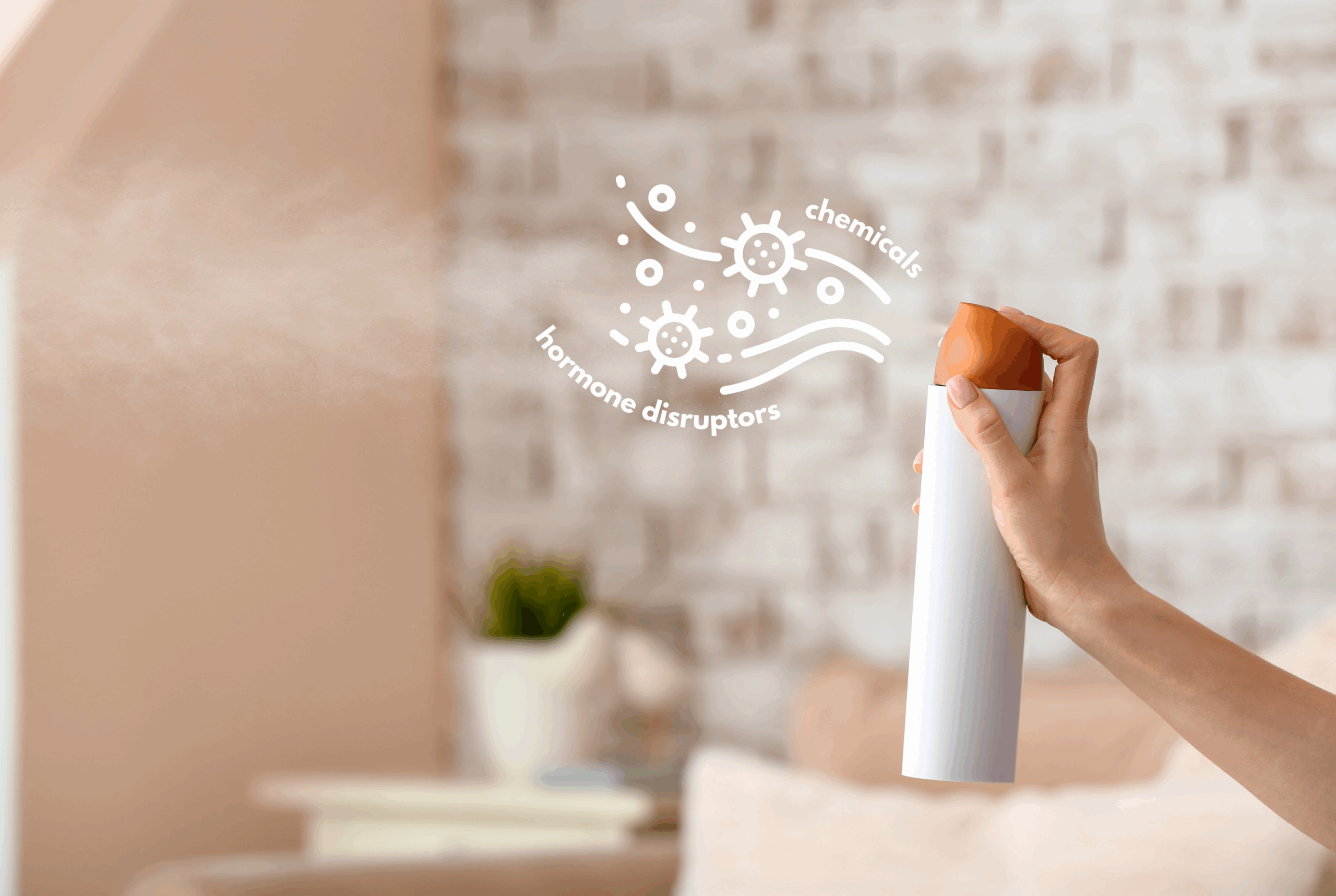
- Air fresheners & candles: synthetic fragrances often contain phthalates
Why are phthalates toxic?
Phthalates are known as endocrine disruptors. That means they interfere with your hormones, which are your body’s chemical messengers that control everything from growth to mood to fertility.
Research has linked phthalates to:
- Hormonal imbalances
- Reproductive issues (reduced fertility in both men and women)
- Developmental problems in children
- Asthma and allergies
- Increased risk of certain cancers
The biggest concern? Phthalates don’t stay put. They leach out of plastics, rub onto your skin, and get into the air you breathe. Once in your body, they can mimic or block hormones, creating all sorts of downstream health effects.
How do they get into your body?
- Skin contact – lotions, detergents, cleaners, cosmetics
- Inhalation – scented products, air fresheners, off-gassing plastics
- Ingestion – food and drinks stored in soft plastics that leach phthalates
How to reduce exposure
- Choose products labeled “phthalate-free” or fragrance-free
- Swap plastic containers for glass or stainless steel
- Use non-toxic candles and air fresheners (beeswax, essential oils, diffusers)
- Read ingredient labels carefully, if you see “fragrance” or “parfum,” that usually means phthalates are hiding in there.
Phthalates might feel like one of those invisible threats you can’t avoid, but knowledge is power. By learning what they are and where they hide, you can make simple swaps that lower your exposure and protect your health.
RELATED: Why are most candles so toxic and what ones to buy instead?